
Off-grid batteries are energy storage solutions used in off-grid solar power systems that operate independently from the UK national grid. Commonly paired with solar panels, these systems support a sustainable, low-carbon lifestyle by storing renewable energy for later use. An off-grid solar battery stores excess electricity generated during the day, enabling reliable power supply at night or during low-sunlight periods, making it ideal for remote homes, rural properties, cabins, and eco-friendly living in the UK.
What Does Off-Grid Battery Mean?
The Heart of a Solar Power System
An off-grid battery refers to any battery used in a fully grid-independent solar or renewable energy system, regardless of brand or type. In the UK, off-grid homes rely on solar panels or wind turbines for power, making the battery the backbone of the system. It stores excess energy during peak production and supplies reliable renewable electricity when generation is low, ensuring continuous power for your home or devices.
How Do Off-Grid Batteries Work in a Solar Power System?
An off-grid solar battery follows a simple cycle:
- Storing excess energy during the day
During sunny hours, solar panels often generate more electricity than a home needs. The off-grid battery stores this surplus energy, preventing waste and saving it for later use. - Supplying power at night or during low sunlight
When the sun sets or the weather is cloudy, the battery releases stored electricity, providing reliable renewable power to your home until solar generation resumes.
What Batteries Are Used for Off-Grid Solar Systems?
No single battery is exclusively designed for off-grid use, but different battery chemistries perform better depending on the specific needs of UK off-grid solar systems. Homeowners can choose between long-lasting lithium batteries for daily energy independence or budget-friendly lead-acid options for seasonal properties. Emerging technologies like flow and sodium-ion batteries offer high safety and lifespan but are mostly used in large-scale or commercial renewable energy storage. Selecting the right battery ensures reliable, sustainable power and maximises the efficiency of your solar panels.
LiFePO4 Batteries
LiFePO4 (Lithium Iron Phosphate) batteries are the most popular for modern off-grid homes. They offer up to 15 years lifespan, high safety, and minimal maintenance. Though upfront costs are higher, their long-term cost per kWh is lower, making them ideal for reliable home solar storage.
Lead-Acid Batteries
A budget-friendly option, lead-acid batteries last 3–5 years, require regular maintenance, and are bulkier. They are perfect for weekend cottages, cabins, or seasonal UK properties where continuous use is not needed.
Flow & Sodium-Ion Batteries
These batteries provide long lifespans and enhanced safety but are rarely used in residential off-grid setups. They are mainly found in large-scale or commercial energy storage projects.
Battery Differences: Off-Grid vs. On-Grid vs. Hybrid Systems
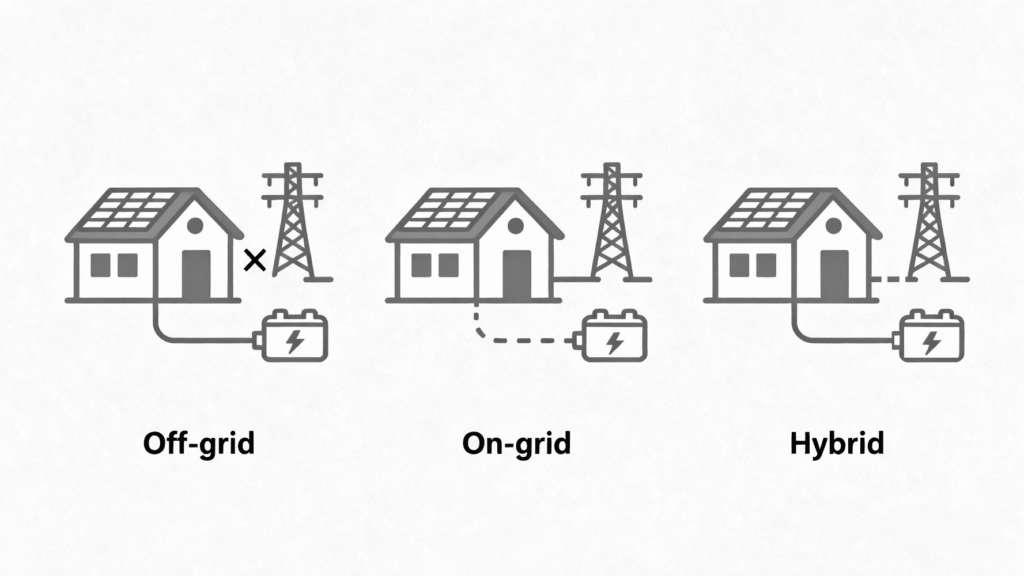
The role of energy storage batteries varies depending on how a system connects to the UK power grid. There are three main types: off-grid, grid-connected, and hybrid.
Off-Grid Systems
Grid connection: Fully independent from the public grid.
Battery role: Stores surplus power from solar panels or generators and supplies electricity when production is low.
Common applications: Remote cabins, rural homes, or RVs with no grid access.
On-Grid Systems
Grid connection: Always connected to the national grid.
Battery role: Shifts energy use to off-peak hours, reduces bills, stabilises voltage and frequency, and can provide backup if designed for outages.
Common applications: Areas with high peak/off-peak tariffs or intermittent grid reliability.
Hybrid Systems
Grid connection: Normally connected but can operate independently when needed.
Battery role: Combines off-grid independence and on-grid savings, switching modes automatically using smart controls.
Common applications: UK households or businesses seeking cost savings and energy security, and commercial energy storage solutions.
FAQs About Off-Grid Batteries
What voltage are off-grid batteries?
Off-grid batteries for UK homes range from 12V or 24V for small systems to 48V for larger residential or commercial solar setups.
Do I need a permit to install an off-grid battery system?
Yes, installation usually requires electrical and building permits. Always check local UK planning and electrical regulations and work with a certified installer.
How much does it cost to install an off-grid battery?
LiFePO4 batteries typically cost £250–£500 per kWh, while lead-acid batteries range from £80–£250 per kWh, depending on size and system type.
Can home batteries be charged from the grid?
Pure off-grid systems cannot use the grid for charging. Hybrid systems in the UK allow grid charging for extra flexibility and reliability.
How do I size an off-grid battery?
A simple approach: daily energy usage × number of backup days ÷ battery depth of discharge. Always consult a professional solar installer for precise sizing.
Choosing the Best Battery for Off-Grid Systems
The quality and performance of an off-grid battery system directly shape the success of off-grid living. Choosing a battery from a brand that truly understands off-grid solar challenges is essential for long-term reliability and energy independence.
A high-quality battery brand designs its products around real off-grid applications, from rural homes to complex renewable energy projects. BSLBATT embodies this approach by combining advanced LiFePO4 lithium iron phosphate technology with an intelligent battery management system (BMS). Our batteries deliver efficient energy storage and discharge while adapting seamlessly to demanding off-grid environments, ensuring stable, long-lasting green power.
To build an off-grid energy storage solution tailored to your exact needs, contact BSLBATT and let our professional team power the growth of your off-grid solar business.